With the continuous upgrading of modern baking tools, silicone pastry fiber baking sheets, thanks to their microporous structure design, are gradually becoming an important auxiliary material for improving baking quality. Especially when making tarts, puff pastries, and cakes, the control of moisture within the dough directly affects the texture, layers, and appearance of the finished product. Uneven moisture evaporation can easily lead to localized over-drying or internal dampness, thus affecting the overall baking result.1. Microporous Structure Enables Uniform Airflow ExchangeThe microporous design of silicone pastry fiber baking sheets essentially creates numerous evenly distributed tiny pores on the material's surface, allowing hot air to penetrate the bottom of the dough more evenly during baking. This structure overcomes the limitations of concentrated heat conduction in traditional solid molds, creating a more balanced diffusion of hot air across the surface of the sheet, thus promoting a more consistent rate of moisture evaporation and preventing localized moisture accumulation or rapid loss.
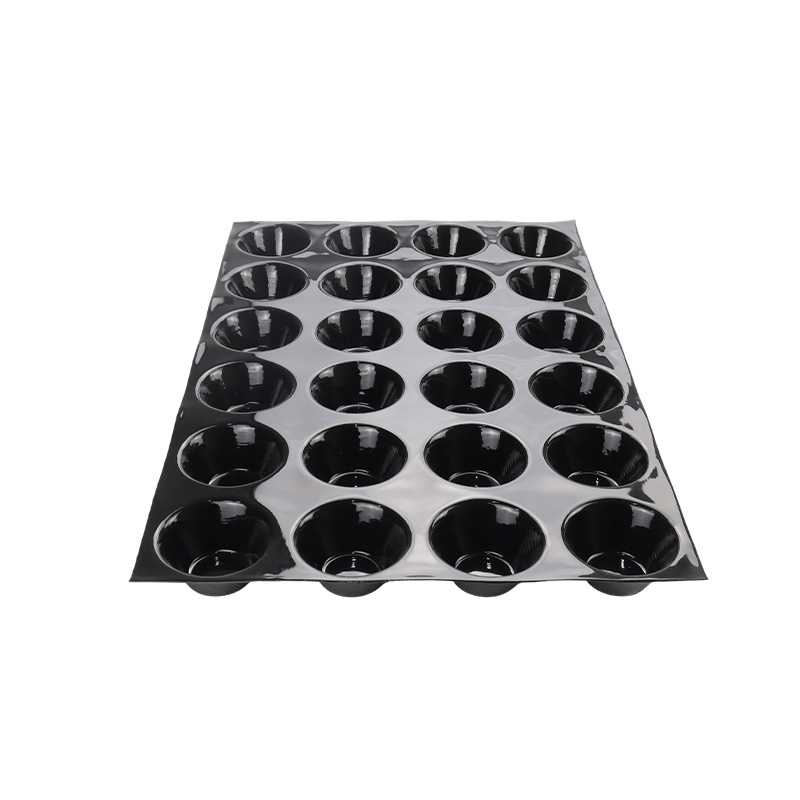
2. Improved Heat Transfer Efficiency Promotes a Stable Dehydration ProcessDuring baking, heat transfer efficiency directly affects the rate of moisture evaporation. The microporous glass fiber silicone structure not only possesses excellent thermal conductivity but also accelerates heat distribution through its internal fiber network, resulting in a more uniform temperature across the entire contact surface. This ensures more stable heating at the bottom of the dough, preventing rapid moisture loss due to localized high temperatures or retention in low-temperature areas, thus achieving a more balanced dehydration process.3. Optimized Pore Size Distribution Controls Evaporation RateThe key to the microporous structure lies in the scientific design of pore size and distribution density. By controlling the pore density in different areas, the rate of moisture evaporation can be precisely adjusted. For example, appropriately increasing the pore density in areas with greater dough thickness accelerates moisture release, while maintaining a lower pore density in thinner areas prevents over-drying. This differentiated structural design ensures a uniform humidity gradient throughout the dough during baking.4. Double-Sided Breathable Structure Enhances Overall Baking ConsistencySome high-end silicone baking mats employ a double-sided microporous structure design, allowing hot airflow to enter not only from the bottom but also, to a certain extent, diffuse laterally and in opposite directions. This multi-directional ventilation mechanism helps overcome the unevenness caused by unidirectional heat transfer, allowing moisture to be released simultaneously from the dough in multiple directions. This improves overall baking consistency and prevents undercooked or over-dryed areas.5. Synergistic Effect of Material Flexibility and Structural StabilitySilicone material itself possesses excellent flexibility and high-temperature resistance. Supported by its microporous structure, it maintains a stable shape in high-temperature baking environments and is not easily deformed. This structural stability ensures that the micropores will not collapse or become clogged during long-term use, thus maintaining excellent ventilation and making moisture evaporation more stable and reliable.
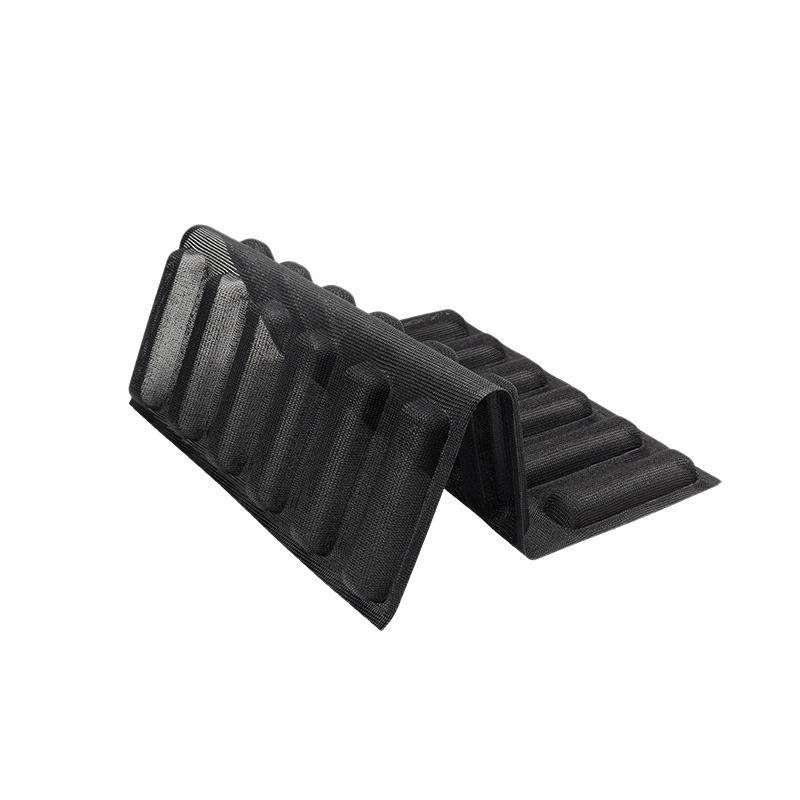
6. Improved Taste and Appearance QualityAfter achieving uniform moisture evaporation through the microporous structure, the dough's internal structure becomes more delicate and uniform. The baked goods exhibit a crisp exterior and moist interior with distinct layers. Simultaneously, due to the even moisture release, the surface browning is more consistent, contributing to improved overall appearance quality and giving desserts a more professional baking effect.Therefore, through its microporous structure design, the silicone pastry fiber baking sheet effectively improves the uniformity of dough moisture evaporation by synergistically enhancing the baking quality through factors such as uniform hot airflow distribution, optimized heat conduction, pore size control, and double-sided ventilation. This makes it of significant value in modern fine baking applications.