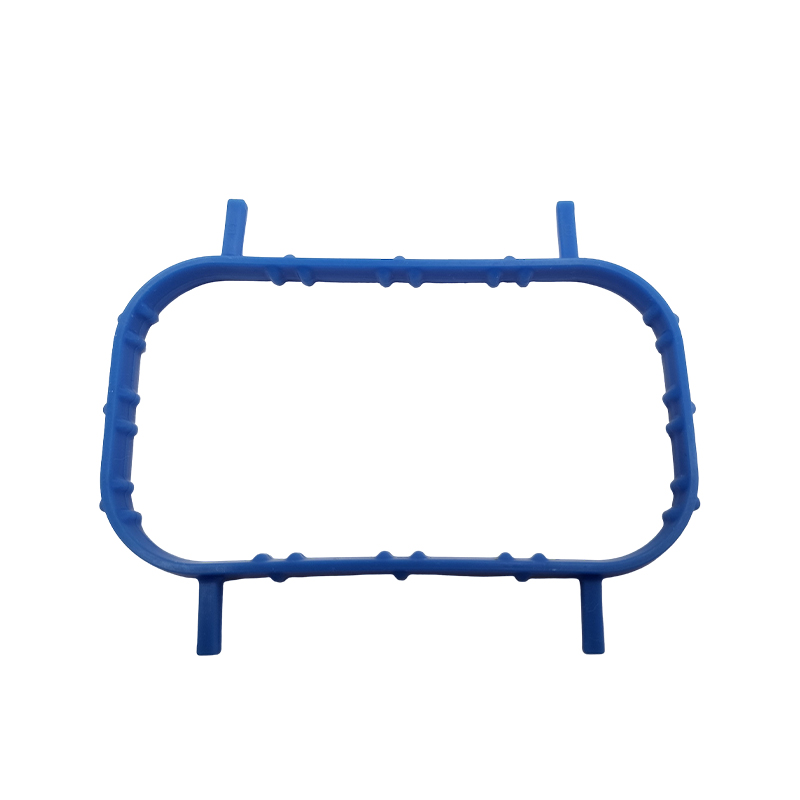
During the operation of new energy vehicles, the safety of the battery system is always a core concern. Battery thermal runaway, as the most dangerous form of failure, can lead to high temperatures, fire, and even explosion. The new energy vehicle battery pack seal ring not only performs its basic sealing function but also, through the synergistic effect of its flame-retardant and insulating properties, constructs a crucial safety barrier, thereby delaying the development of the accident and reducing its severity.
1. Flame-retardant properties form the first line of defense
When a battery experiences thermal runaway, the local temperature rises rapidly, even exceeding several hundred degrees Celsius, accompanied by the release of flammable gases. In this situation, if the sealing ring material possesses excellent flame-retardant properties, it can effectively inhibit the spread of flames. Under high temperatures, flame-retardant materials form a charred layer or a heat-insulating layer, blocking the contact between oxygen and combustibles, thus slowing down the combustion process. Furthermore, this material can reduce the flame propagation speed, buying valuable time for the system to take emergency measures and preventing the fire from spreading rapidly between battery modules.
2. Insulation Performance Ensures Electrical Safety
Thermal runaway is not only a thermal problem but also carries electrical risks. High temperatures can damage the internal structure of the battery, leading to short circuits or leakage. Sealing rings possess excellent insulation properties, isolating conductive paths in critical areas and preventing abnormal current flow. Even in high-temperature or humid environments, high-quality sealing materials maintain stable dielectric properties, preventing arcing or electrical breakdown and further reducing the risk of fire and secondary accidents.
3. Synergistic Mechanism of Flame Retardancy and Insulation
Single properties are insufficient to address complex thermal runaway scenarios; therefore, the synergy of flame retardancy and insulation is crucial. On one hand, flame retardancy controls the spread of ignition sources, slowing the overall temperature rise; on the other hand, insulation prevents the expansion of electrical faults, avoiding the creation of new heat sources due to short circuits. The two work together to ensure the battery system maintains a certain degree of structural and functional integrity under extreme conditions, forming a multi-layered safety protection system.
4. Material Selection and Structural Design Optimization
To achieve the above performance, sealing rings typically use high-performance elastomer materials, modified by adding flame retardants and insulating fillers. These materials not only possess high-temperature resistance and chemical corrosion resistance, but also maintain good elasticity at low temperatures. Furthermore, in terms of structural design, through reasonable cross-sectional shape and compression ratio control, it can ensure that the sealing ring maintains a stable seal under thermal expansion or pressure changes, preventing flammable gas leakage and reducing risks at the source.
5. Enhancing the Overall System Safety Level
In the design of new energy vehicle battery packs, although the sealing ring is a small component, its role cannot be ignored. By improving its flame retardant and insulation properties, the battery system's ability to withstand extreme operating conditions can be effectively enhanced. Simultaneously, combined with the coordinated work of the thermal management system and safety monitoring system, the overall vehicle safety redundancy level can be further improved, providing users with more reliable usage protection.
6. Future Development Direction
With the continuous advancement of new energy vehicle technology, the requirements for battery safety are also continuously increasing. In the future, sealing ring materials will develop towards higher temperature resistance, stronger flame retardancy, and more stable insulation properties, while also considering environmental protection and lightweight requirements. Through continuous advancements in material innovation and structural optimization, sealing rings will play an even more important role in the battery safety protection system.
The new energy vehicle battery pack seal ring, through the synergistic effect of flame retardancy and insulation, effectively suppresses the spread of fire and prevents the escalation of electrical faults, providing crucial safety assurance for the new energy vehicle battery system. This multi-layered protection mechanism is an important foundation for achieving highly safe battery design.