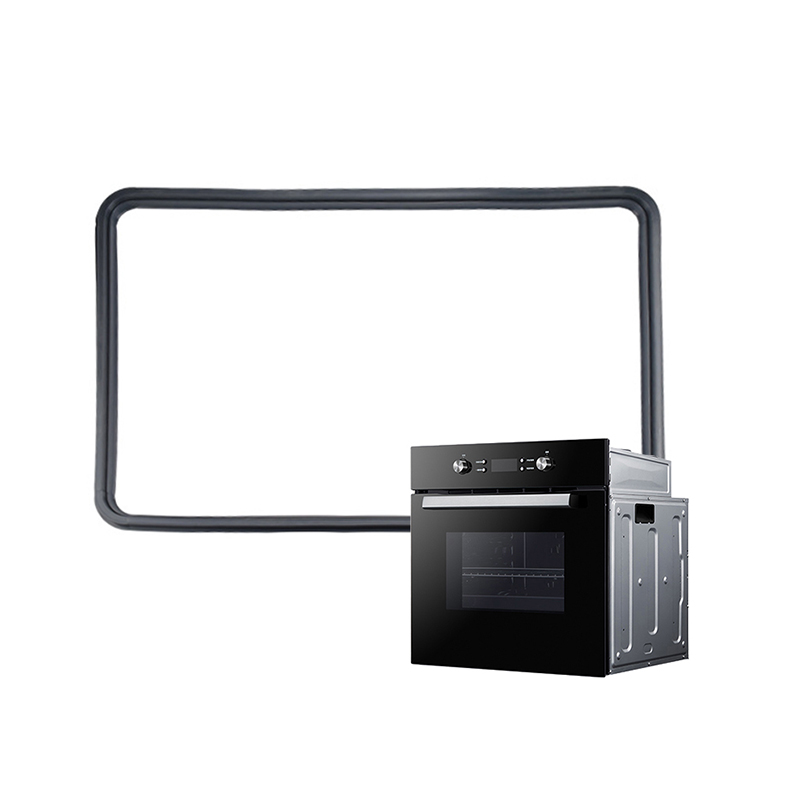
How can a silicone oven door seal balance airtightness, aging resistance, and easy cleaning?
Publish Time: 2026-02-16
In modern kitchen appliances, ovens are not only cooking tools but also a comprehensive reflection of safety, energy efficiency, and user experience. As a key sealing element for oven doors, the silicone sealing strip, though seemingly insignificant, directly impacts thermal efficiency, energy consumption, and ease of use. A silicone oven door seal must simultaneously meet three core requirements: excellent airtightness to prevent heat leakage, superior high-temperature aging resistance to ensure long-term reliability, and a smooth, easy-to-clean surface to meet frequent cleaning needs.1. High Elasticity and Precise Cross-Section Design: Building an Efficient Thermal Sealing BarrierThe foundation of airtightness lies in the sealing strip's ability to fully fill the tiny gaps between the door and the cavity when the door is closed. Food-grade high-temperature silicone maintains a stable elastic modulus within a temperature range of -60℃ to 300℃, with a compression set of less than 15%, allowing it to recover its original shape even after thousands of opening and closing cycles. Its cross-section often employs a D-shaped, P-shaped, or hollow tube structure—the hollow portion collapses under pressure to create a larger contact area, while the solid base provides support. This design achieves uniform line contact with relatively low closing force, effectively preventing hot air leakage and improving thermal efficiency by 5%–10%, while simultaneously reducing the outer shell temperature and ensuring user safety.2. Inorganic Fillers and Antioxidant System: Resisting Long-Term Thermal and Oxidative AgingOven cavity temperatures often exceed 250℃ during operation. Traditional rubber is prone to chain breakage or excessive cross-linking under these conditions, leading to hardening and cracking. Silicone, however, has a high-energy Si–O bond backbone, inherently possessing excellent thermal stability. Based on this, fumed silica is added as a reinforcing filler, and hindered phenolic antioxidants and metal passivators are compounded to form a multi-protective system. After a 250℃ × 1000-hour thermal aging test, the high-quality silicone sealing strip retains over 80% of its tensile strength, with no powdering or cracking on the surface, ensuring consistent sealing performance throughout the product's lifespan.3. Dense, Smooth Surface and Hydrophobic Treatment: Achieving "One Wipe Clean"Easy cleaning stems from the combination of the material's inherent properties and post-processing techniques. Platinum-cured silicone rubber produces no byproducts during curing, resulting in a dense, non-porous surface that resists the absorption of oil stains and food residue. Some high-end products undergo plasma treatment or are coated with a nano-hydrophobic coating after extrusion molding, creating a surface contact angle greater than 100° and a "lotus effect." Moisture and grease are difficult to adhere to; daily cleaning requires only a light wipe with a damp cloth, avoiding the problems of dirt accumulation and bacterial growth associated with traditional porous rubber. Furthermore, silicone itself is odorless and does not release harmful substances, even at high temperatures, ensuring the safety of baked goods.4. Integrated Molding and Environmentally Friendly Manufacturing: Enhancing Reliability and SustainabilityModern silicone sealing strips generally employ continuous extrusion + hot air vulcanization or microwave vulcanization processes, achieving customized lengths and seamless connections. For irregularly shaped doors, integrated sealing rings with corners can be molded, completely eliminating the risk of leakage at seams. The production process is solvent-free and free of heavy metals, and waste materials can be recycled and granulated, aligning with the trend of green home appliance development.The silicone oven door seal is a miniature integration of material properties, structural intelligence, and process precision. With its "flexible body," it guards the boundaries of high temperatures; with its "clean surface," it responds to the needs of daily life; and with its "durable quality," it delivers on its long-term promise. In the modern kitchen, which pursues efficiency, health, and convenience, this seemingly simple component is silently safeguarding the perfect baking experience every time.