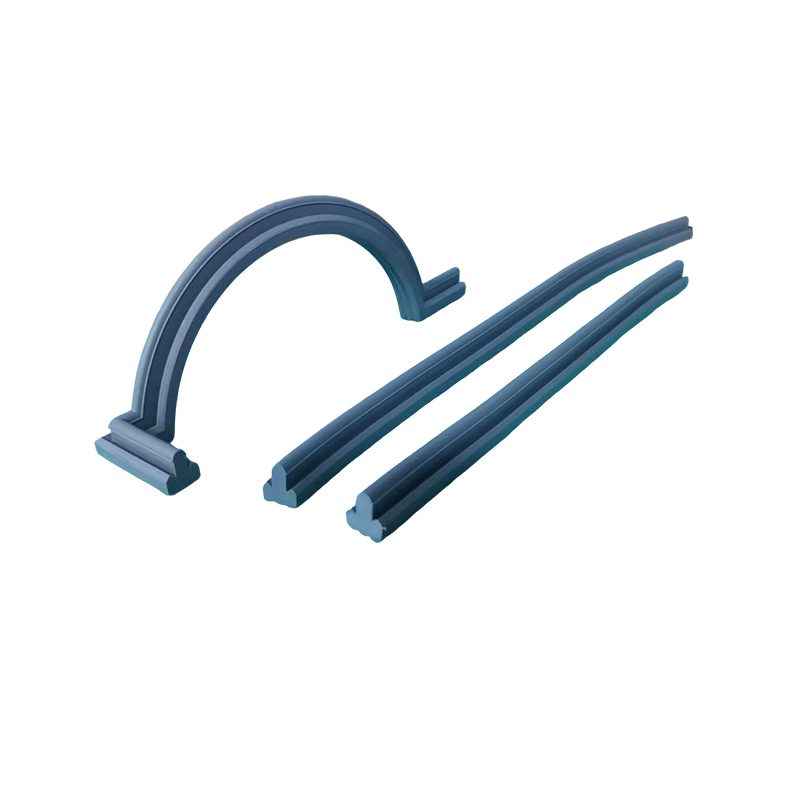
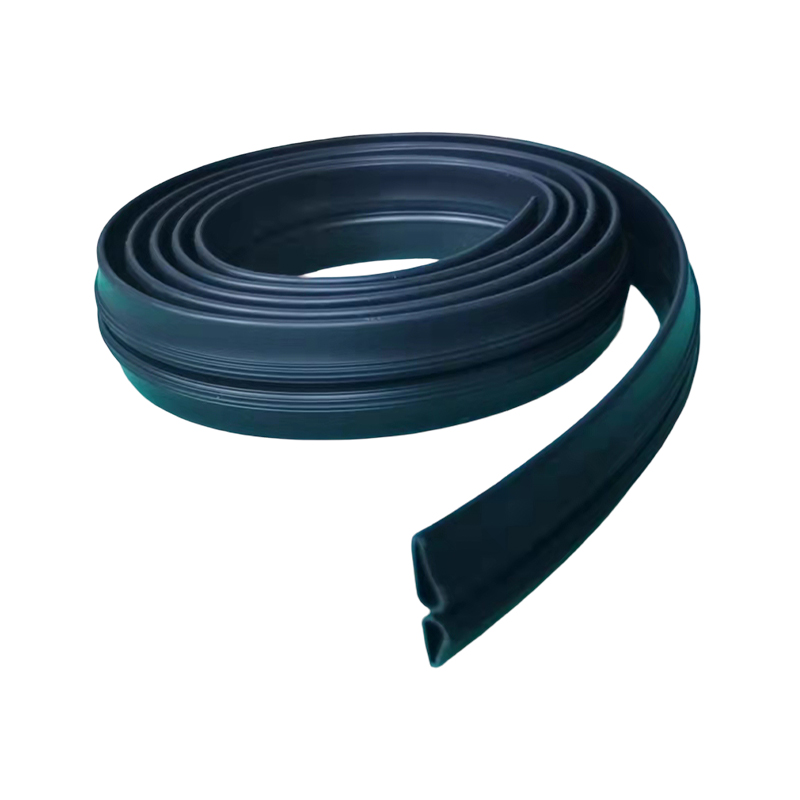
How does silicone extrusion seal strip maintain its elasticity and sealing performance in extreme high and low temperature environments?
Publish Time: 2026-02-03
In aerospace, rail transportation, new energy vehicles, industrial equipment, and high-end building doors and windows, sealing materials often face harsh environmental tests, ranging from extremely cold plateaus to high-temperature engine compartments. Ordinary rubber or plastic seals are prone to hardening and cracking at low temperatures, and softening, deforming, or even carbonizing and failing at high temperatures. Silicone extrusion seal strip, with its unique molecular structure and material properties, has become one of the few high-performance sealing solutions that can operate stably for extended periods within a temperature range of -60℃ to +250℃ or even wider. Its superior high and low temperature adaptability stems from the synergistic effect of its chemical nature, optimized formulation, and extrusion process.1. The silicon-oxygen backbone structure provides natural thermal stabilityThe core advantage of silicone lies in its backbone, which is composed of alternating silicon and oxygen atoms, rather than the carbon-carbon bonds found in traditional organic rubbers. This means it is more difficult to break due to heat. Simultaneously, the large silicon-oxygen bond angle and high degree of rotational freedom allow the molecular chain to maintain high flexibility even at low temperatures. Therefore, even in extreme cold of -60℃, the silicone molecular chains do not "freeze" and retain excellent resilience; while at high temperatures of 250℃, the main chain structure is less prone to breakage or excessive cross-linking, preventing hardening or flow. This intrinsic temperature resistance is the fundamental reason why silicone extrusion seal strips do not fail in extreme environments.2. High-purity formulation and reinforcement system ensure long-term performanceTo meet the needs of different application scenarios, the silicone extrusion seal strip features a refined formulation design based on the base polymer. First, high-purity fumed silica is used as a reinforcing filler, which not only improves tensile and tear strength but also inhibits compression set at high temperatures. Second, heat-resistant additives are added to capture free radicals and delay high-temperature aging; in low-temperature applications, the cross-linking density is optimized to avoid embrittlement caused by over-sulfurization. Furthermore, high-quality silicone is plasticizer-free, eliminating the hardening and shrinkage problems caused by plasticizer migration and volatilization in traditional PVC or EPDM seal strips. These formulation strategies collectively ensure that the seal strip maintains more than 90% of its original elasticity and sealing force after thousands of hours of high and low temperature cycling.3. Precision Extrusion and Continuous Vulcanization Process Ensure Consistent PerformanceThe performance of silicone extrusion seal strips depends not only on the material itself but also on the manufacturing process. During extrusion, high-precision molds and a constant temperature control system ensure that the cross-sectional dimensional tolerance is controlled within ±0.1mm, preventing localized stress concentration due to uneven thickness. Subsequently, the seal strip completes the cross-linking reaction through continuous hot air vulcanization or microwave vulcanization. Compared to compression molding, continuous vulcanization results in a more uniform and dense cross-linked network, significantly reducing the compression set rate. This uniform three-dimensional network structure prevents the seal strip from developing "cold flow" or permanent indentations during repeated compression-rebound cycles, thus achieving a durable and reliable seal in critical components such as door frames, hatch covers, and battery packs.