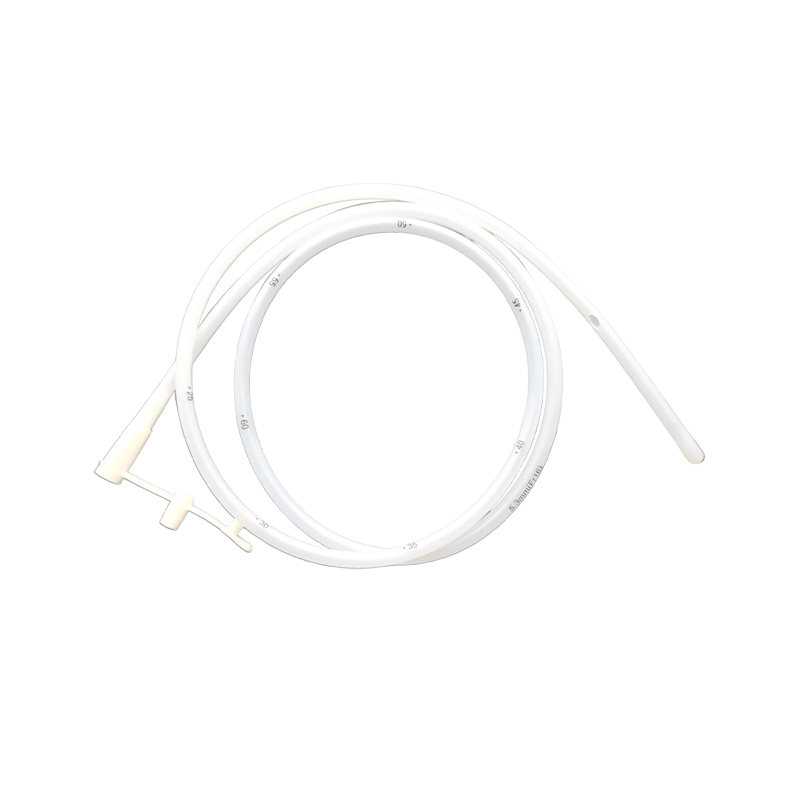
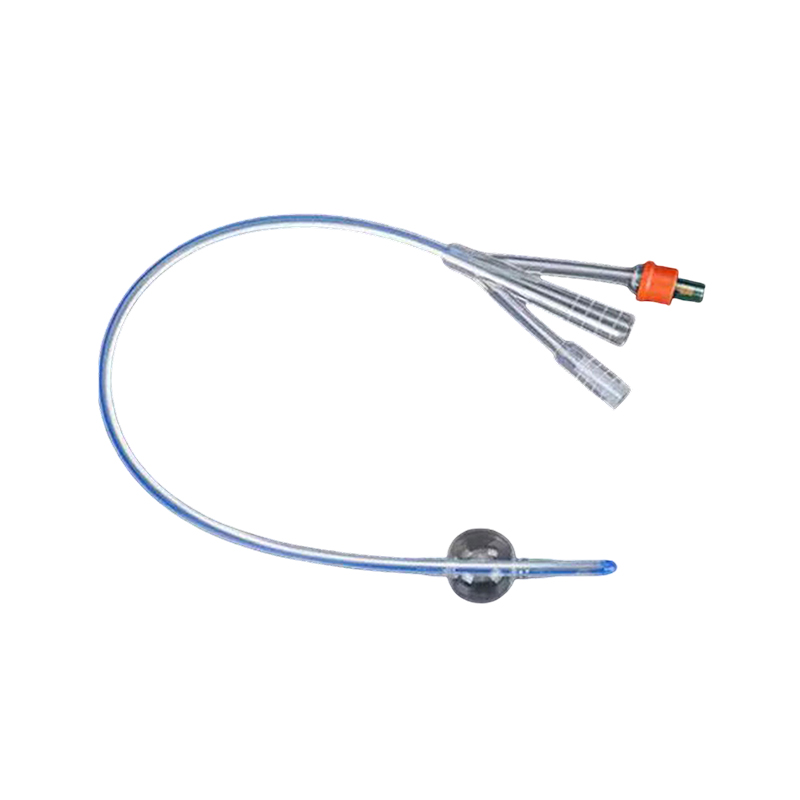
In the field of medical devices, medical accessory catheters are hailed as "channels of life," their performance directly impacting the success of surgery and the patient's recovery experience. Silicone, due to its excellent biocompatibility, chemical stability, and temperature resistance, has become the preferred material for manufacturing high-end catheters.1. Microscopic Control of Hardness: The Cornerstone of the Gradient HypothesisShore hardness is the core indicator for measuring the degree of silicone's firmness and is the first hurdle in balancing support and comfort. Traditional single-hardness catheters often struggle to meet both ends of the need: too hard, they easily damage the fragile vascular endothelium, causing spasm or perforation; too soft, they are prone to bending and kinking during insertion, leading to surgical failure. A precise matching strategy is first reflected in the design of "gradient hardness." Modern high-end silicone catheters no longer use a uniform material formulation but instead use co-extrusion technology to composite silicone layers of different hardnesses.2. Empowering with Structural Mechanics: The Art of Weaving and WrappingAdjusting material stiffness alone is sometimes insufficient to cope with extremely complex surgical environments, necessitating the introduction of structural mechanics for reinforcement. Embedding a reinforcing skeleton within a soft silicone matrix is a key method to improve support without sacrificing overall flexibility. Common techniques include stainless steel wire braided mesh, nickel-titanium alloy spiral winding, or polymer fiber reinforcement. These reinforcing structures are precisely wrapped inside or within the silicone tube wall. When the catheter is subjected to axial thrust, the braided mesh or spiral wire efficiently transmits the force to the distal end, preventing tube collapse or elongation and providing strong support; conversely, when the catheter encounters a vascular bend, these structures allow for large-angle bending without kinking. By adjusting the braiding density, winding pitch, and wire diameter, engineers can fine-tune the catheter's "push-pull feel" and "trackability," much like a sound engineer.3. Optimizing the Surface Interface: Minimal Reduction of the Coefficient of FrictionBesides the material itself and internal structure, the frictional characteristics of the interface between the catheter and human tissue are also a crucial factor affecting comfort. Even with perfect hardness matching, excessive surface friction can still translate into shear force on tissues during insertion, causing pain or damage. Therefore, surface modification technology becomes the final piece of the puzzle in this balancing strategy.
In conclusion, achieving a balance between support and comfort in medical accessory catheters is not simply a matter of material selection, but a systematic and precise engineering process involving materials science, structural mechanics, and surface engineering. Through gradient hardness material ratios, enhanced micro/nanostructure design, and intelligent surface friction control, modern medical catheters have successfully broken free from the traditional constraints of "stronger is harder, softer is weaker."